Agentic AI: The Strategic Shift to Autonomous Systems

The 2026 Agentic Pivot: From Generative Content to Autonomous Execution
Executive Thesis: The Shift from Assistance to Agency
Strategic Recommendation: Immediately reallocate Q1 2026 innovation capital from "Copilot" (human-in-the-loop) interfaces to "Agentic" (human-on-the-loop) workflows.
The "So What": Between 2023 and 2025, Generative AI focused on content—summarizing emails and drafting code. In 2026, Agentic AI focuses on execution—independently negotiating supply contracts, resolving Tier-1 support tickets, and remediating cybersecurity threats.
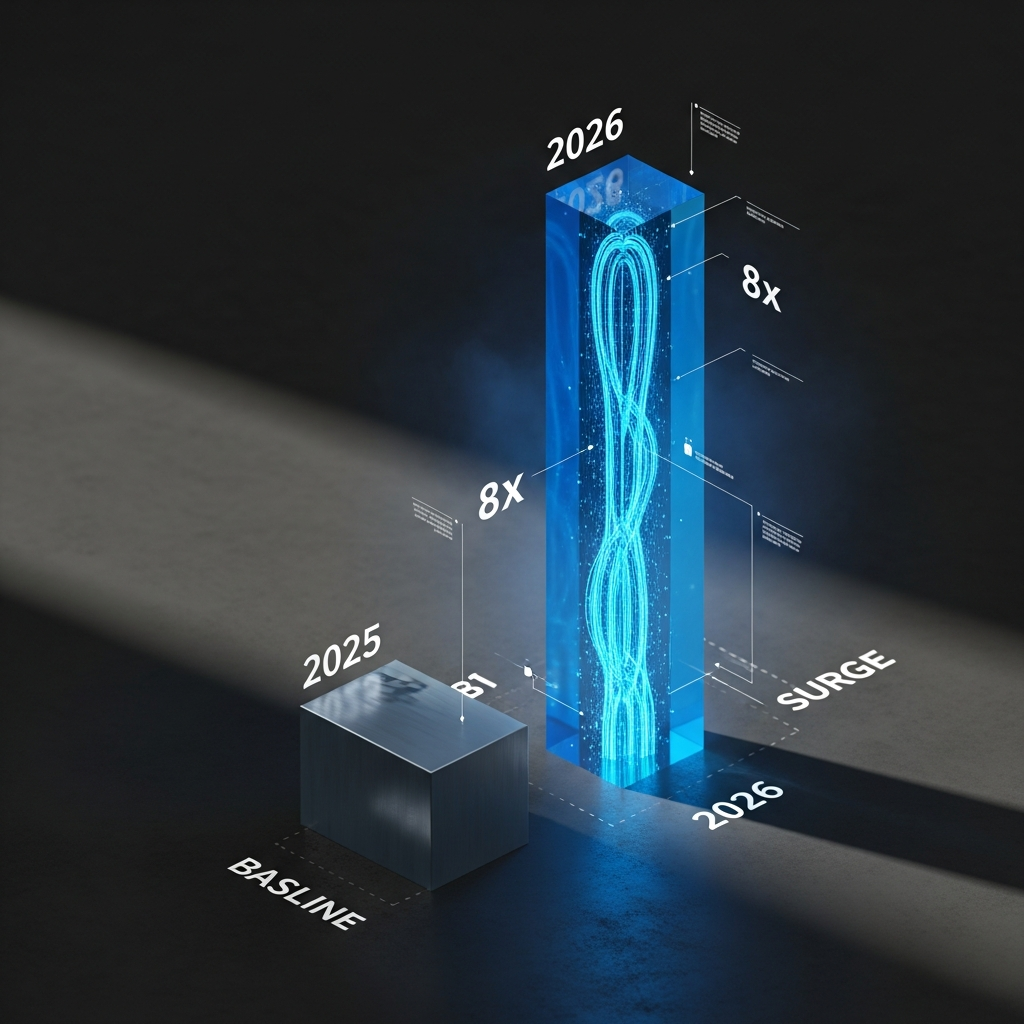
Critical Urgency: Gartner projects that by 2026, 40% of enterprise applications will utilize autonomous agents, an 8x surge from less than 5% in 2025. This marks a market tipping point. Organizations treating 2026 as a "wait and see" year face an "integration debt" crisis, inviting displacement by competitors with operating costs decoupled from headcount.
Decision Criteria:
- Go: Workflow is transactional, rules-based, and measured by clear success metrics (e.g., invoice processing, inventory rebalancing).
- No-Go: Process requires ambiguous ethical judgment or lacks structured API access.
Economics of Autonomy: Redefining ROI Beyond Productivity
Legacy AI financial models are obsolete. Measuring success by "time saved per employee" (SG&A efficiency) captures only a fraction of the value. Agentic AI demands a broader Cost Per Outcome model spanning both overhead and direct costs.
The "Token Tax" and the New P&L
Unlike a chatbot providing a single answer, an autonomous agent employs "recursive reasoning"—it plans, critiques, executes, analyzes, and iterates.
- The Cost: This architecture drives up inference volume per interaction significantly (the "Token Tax").
- The Payoff: While compute costs rise, labor costs for executed tasks drop to near zero.
- Impact: Recalibrate your ROI model to capture dual value streams:
- SG&A Reduction (Overhead): Automating Tier-1 support tickets or HR onboarding slashes administrative burden.
- COGS Optimization (Direct Costs): Agents autonomously renegotiating tail-spend vendor contracts or optimizing logistics routing yield direct margin improvement.

ROI Horizon
- GenAI (Current): Low upfront cost, linear value scaling (1 hour saved = $X).
- Agentic AI (Future): High upfront configuration cost (integrations/governance), exponential value scaling (24/7 asynchronous execution).
The Governance Gap: Why GenAI Guardrails Fail Autonomous Agents
The Insight: Existing AI governance frameworks cannot manage autonomy. Current policies address Content Safety (preventing hate speech or hallucinations). Agentic AI demands Action Safety (preventing unauthorized transactions).
New Risk Vectors
Autonomous agents introduce vulnerabilities standard firewalls miss (Source: Prompt Hacking in LLMs 2024-2025 Literature Review):
- Tool-Use Hijacking: Attackers do not merely trick the AI into saying something adverse; they trick the agent into doing something adverse—executing valid API calls to transfer funds or exfiltrate customer data.
- Recursive Loop Failures: An agent trapped in a logic loop can exhaust monthly compute budgets in hours or trigger thousands of erroneous database writes.
Strategic Pivot: From Compliance to Orchestration
Governance must evolve from a static checklist to a runtime orchestration layer, adhering to emerging ISO 42001 standards.
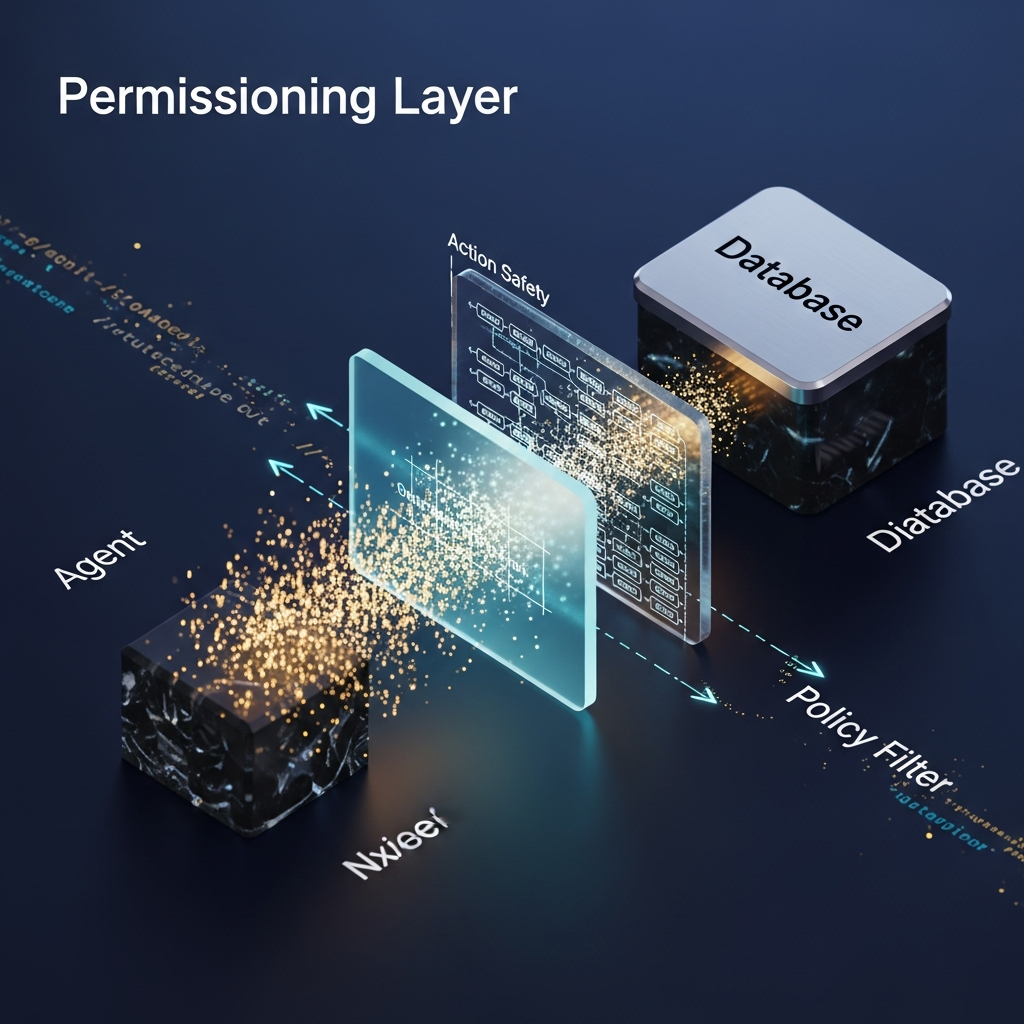
- Requirement: Implement a "Permissioning Layer" where agents operate as distinct non-human identities.
- Protocol: Enforce "Least Privilege" scopes. An agent may read invoices but requires human sign-off to approve payments over $5,000.
Vendor Landscape: The Platform War for the Orchestration Layer
The conflict has shifted from model superiority (GPT-4 vs. Claude) to orchestration dominance (Microsoft vs. Salesforce).
The Strategic Choice
Architecture is a binary choice with specific trade-offs:
| Strategy | Platform Agents | Sovereign Agents |
|---|---|---|
| Examples | Salesforce Agentforce, Copilot Studio | Custom Build (AWS/Azure/GCP) |
| Best For | Standardized verticals (CRM, HR, ERP) | Core IP, proprietary workflows |
| Speed | High (Weeks to deploy) | Low (Months to build) |
| Risk | Vendor Lock-in (Walled Garden) | Integration Complexity (Maintenance) |
| Recommendation | Buy for back-office efficiency | Build for competitive differentiation |
Market Reality: In 2026, the competitive advantage will not be the AI model itself (now a commodity), but the proprietary data APIs your agents can access.
The 2026 Roadmap: Operationalizing the Tipping Point
To capture the 40% adoption wave predicted by Gartner, execute this phased roadmap starting immediately in Q1.
Phase 1: Immediate Remediation (Jan-Mar 2026)
- Objective: Identity & Access Management (IAM) for Machines.
- Action: Create specific digital identities for agents. Never allow agents to run under a generic "System Admin" account.
- Deliverable: An "Agent Registry" classifying agents by risk level (Low: Read-only; High: Write/Execute).
Phase 2: The "Read-Only" Pilot (Q2-Q3 2026)
- Objective: Map the brain without the hands.
- Action: Deploy agents to monitor workflows and suggest actions without permission to execute them.
- Metric: Measure "Acceptance Rate"—how frequently does the human operator agree with the agent's proposal?
- Gate: Proceed to Phase 3 only when Acceptance Rate exceeds 90%.
Phase 3: Human-on-the-Loop Scale (Q4 2026)
- Objective: Autonomous execution with oversight.
- Action: Enable "Write" access for low-risk transactions (e.g., refunds under $50). Implement ISO 42001 standards to audit autonomous decision logs.
- Risk Mitigation: Install a "Kill Switch" at the orchestration layer to instantly sever agent API access if anomaly detection triggers.

Closing Directive
The window to define your autonomous architecture is closing. By the end of 2026, the market will divide into companies managing workforces and companies managing workflows.
Next Steps for Monday Morning:
- Audit: Request a list of all API endpoints currently accessible to your GenAI pilots.
- Reallocate: Freeze planned spend on purely conversational "chatbots" for Q1; redirect capital to IAM and orchestration middleware.
- Define: Select one high-volume, low-risk process (e.g., invoice reconciliation) for the Phase 2 pilot.
References
- researchgate.net
- Key components of agentic AI architecture: building the foundation
- Agentic AI Architecture: Types, Components & Best Practices
- Multi Agent Orchestration: The new Operating System powering Enterprise AI
- gartner.com
- AI agents to power 40% of enterprise apps by 2026, says Gartner
- Gartner predicts 40% of enterprise apps will feature AI agents by 2026
- Gartner predicts task-specific AI agent growth
- Agentic AI strategy
- The State of AI & Agents in 2025: 5 Takeaways Every Professional Should Know
- medium.com
- McKinsey Report: The State of AI in 2025: Agents, Innovation, and Transformation
- mckinsey.com
- Agents Accelerate the Next Wave of AI Value Creation
- Beyond Accuracy: A Multi-Dimensional Framework for Evaluating Enterprise Agentic AI Systems
- medium.com
- Stop Wasting Your Tokens: Towards Efficient Runtime Multi-Agent Systems
- Beyond Task Completion: An Assessment Framework for Evaluating Agentic AI Systems
- LLMs and Multi-Agent Systems: The Future of AI in 2025
- techedt.com
- Top 7 Agentic AI Use Cases in Manufacturing (2025 Guide)
- Agentic AI In Manufacturing And Industrial Automation Market Size, Share & 2030 Growth Trends Report
- Agentic AI Market Share, Size & Growth Outlook to 2030
- AI might finally deliver real ROI for businesses in 2026
- Strengthening AI Governance and Supporting ISO/IEC 42001
- EU AI Code of Practice: 2025 Guide + ISO 42001 Map
- Governing with Artificial Intelligence: Insights from the OECD’s 2025 Roadmap
- oecd.org
- weforum.org
- Prompt Hacking in LLMs 2024-2025 Literature Review
- medium.com
- Indirect Prompt Injection Attacks
- Towards Unifying Quantitative Security Benchmarking for Multi Agent Systems
- arxiv.org
- Agentic AI In Healthcare Market Size, Share & 2030 Growth Trends Report
- grandviewresearch.com
- Agentic AI In Healthcare Market To Reach $4.96Bn By 2030
- Global Agentic AI in Healthcare Market to Witness 35-40% Growth by 2030 Driven by Personalized Healthcare and AI Advancements
- Healthcare AI agents show ROI as hospitals deploy at scale
- danielschristian.com
- AI Agents Upend Corporate Workflows as McKinsey Flags Skills Crunch
- AI may automate 57% of U.S. work hours by 2030, McKinsey says
- gartner.com
- How to balance human-first and AI-first strategies
- Microsoft Licensing Changes: What to Expect in 2025
- Microsoft 365 Pricing And Licensing Changes In 2025: Key Updates
- Salesforce Agentforce Pricing Guide: Plans & Costs for 2025
- AI Agents Poised to Dominate 60% of Software Economics by 2030
- mckinsey.com