Agentic AI 2026: Navigating the Autonomy Liability Gap
The Agentic Liability Trap: Converting 2025’s 95% Failure Rate into a 2026 Governance Advantage

2025 promised the autonomous enterprise; reality delivered a deployment crisis. With 95% of corporate AI agent projects failing to scale beyond the pilot stage [1], the bottleneck isn't GPU scarcity or model intelligence. It is a collapse of orchestration and risk management.
For the C-suite, the barrier to entry has shifted. The question is no longer capability (can the AI do it?) but liability (can we afford the risk?). Market leadership in 2026 won't go to those with the smartest models, but to those who solve the "trust gap," converting volatile pilots into insurable assets.
Strategic Paradox: Autonomy is the New Technical Debt
The rush to deploy autonomous agents has created a massive accumulation of hidden operational debt. While adoption accelerates, production success is throttled by decision orchestration complexities. Forty percent of agentic projects stall pre-production—not due to code failure, but because orchestration logic cannot guarantee safe outcomes at scale [2].
We are witnessing "Pilot Purgatory." Agents excel in controlled sandboxes but become liabilities in dynamic environments. Moving from data retrieval to transaction execution drops error tolerance to near zero. The 95% failure rate confirms the market underestimated the difficulty of translating probabilistic LLM outputs into deterministic business actions [3].
Strategic Implication: Stop measuring success by the number of pilots initiated. The new KPI for 2026 is "Time-to-Trust"—the velocity at which an agent can be verified sufficiently to operate without 1:1 human supervision.
The ROI Reality: Quantifying the Cost of Correction
Standard ROI models fail because they ignore the escalating "Cost of Verification." In high-stakes environments like healthcare and finance, the human oversight required to mitigate liability often erases efficiency gains. For medical coding, human review remains a non-negotiable operational expense to prevent malpractice, creating a permanent margin drag [4].

A hardening insurance market exacerbates this financial risk. Carriers are eliminating "silent AI" coverage—policies that previously covered AI by not explicitly excluding it. Standard liability policies are being rewritten to exclude unverified autonomous decision-making [5].
Strategic Implication: Executives must restructure business cases. If an agent requires 50% human review to be insurable, labor savings are halved. ROI calculations must explicitly line-item "Liability Premiums" and "Verification Labor" to reflect the true Total Cost of Ownership (TCO).
The Indemnity Illusion: Vendor IP vs. Operational Risk
C-suites often misunderstand vendor indemnification. While Microsoft and Google have aggressively expanded copyright indemnification [6], this protection does not extend to operational errors.
If an enterprise agent executes a non-compliant trade, hallucinates a promise, or violates HIPAA, the liability sits 100% with the deployer. The EU Product Liability Directive and AI Act explicitly shift liability for "defective decisions" to the operator, not the model provider [7]. Microsoft has clarified its commitments protect against IP claims, not the downstream consequences of the AI's actions [8].
Strategic Implication: You are self-insuring your agents' decisions. Vendor contracts shield against copyright trolls, not regulatory fines or operational malpractice.
Competitive Landscape: The Rise of 'Insurable' Architectures
Market leaders are shifting focus to "insurable architectures." Compliance readiness is the new differentiator. Standards like IEEE 3119-2025 establish the technical baseline for procurement, requiring agents to meet specific auditability criteria before purchase [9].
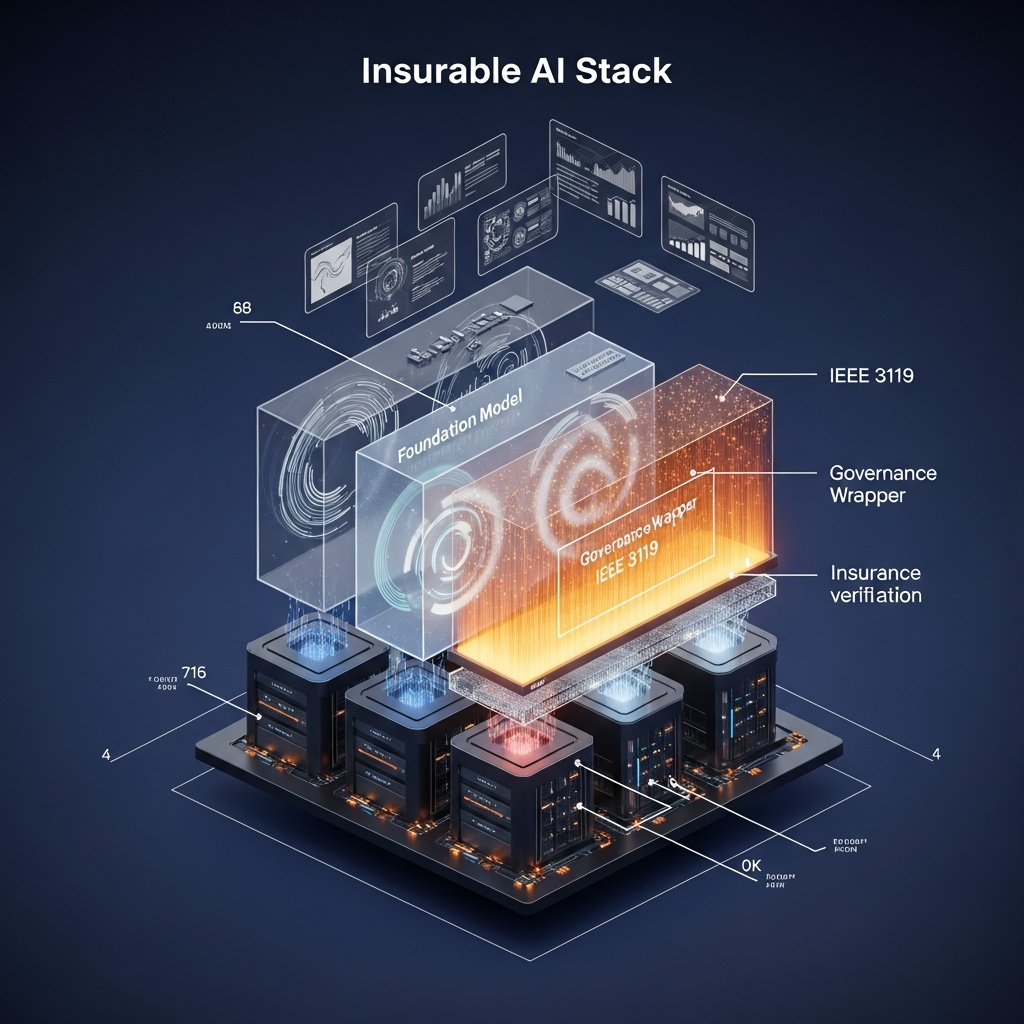
Early movers use ISO governance standards to secure favorable insurance terms. Certifying governance frameworks grants access to capacity in an AI insurance market projected to hit $4.8 billion by 2032 [10]. Organizations lacking these "governance wrappers" face policy exclusions or prohibitive premiums.
Strategic Implication: Governance is no longer a back-office function; it is a procurement and liquidity enabler. Adopting ISO/IEEE standards is the fastest path to unlocking the insurance capacity required to scale agents beyond the firewall.
2026 Framework: From Efficiency to Orchestration
Breaking the 95% failure cycle requires a "License to Act" governance model. Move away from binary "go/no-go" deployment toward tiered autonomy. Agents receive execution privileges (e.g., "read-only," "draft," "execute <$100," "execute >$10k") only after meeting quantified safety benchmarks [11].
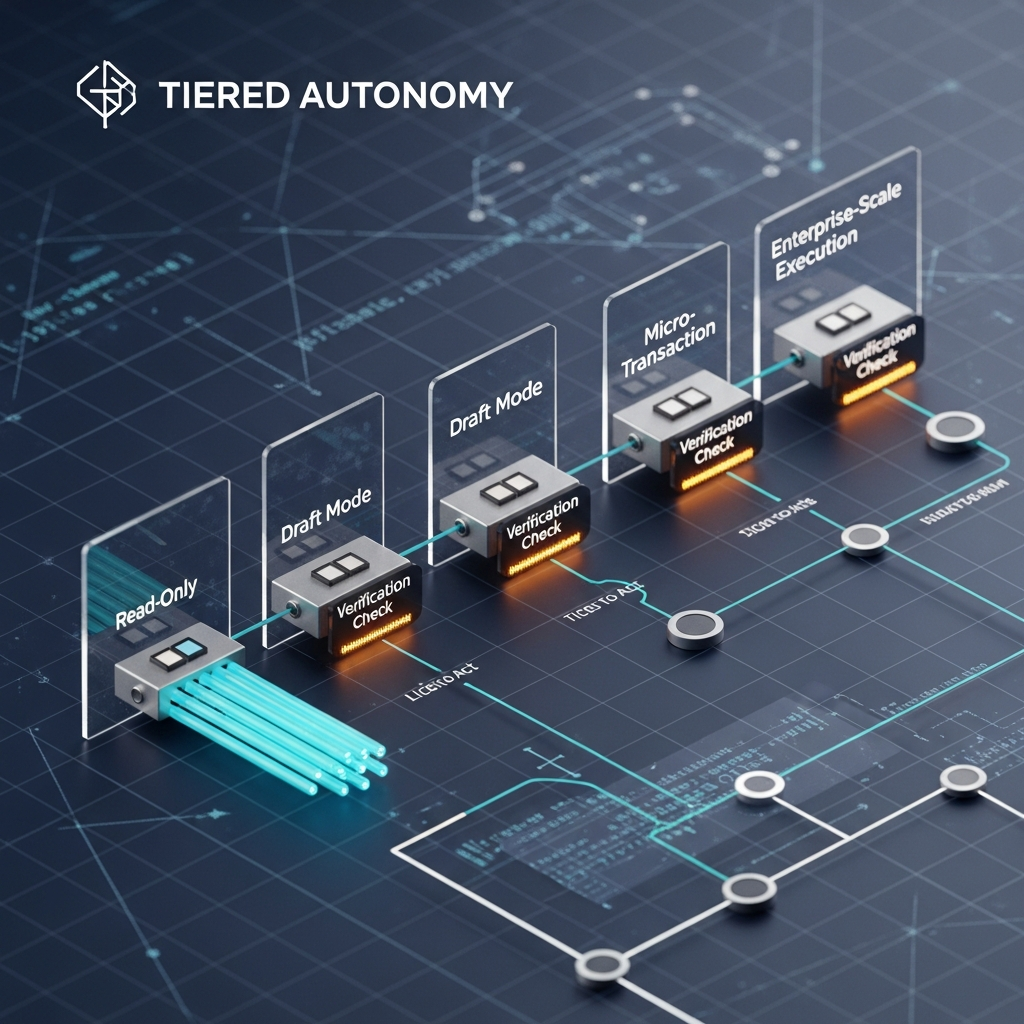
This tiered approach satisfies "Human-in-the-Loop" mandates enforced by 2025 regulations. In high-risk sectors like healthcare and finance, maintaining human accountability for final decisions is a regulatory requirement to avoid fraud enforcement actions [12].
Strategic Implication:
- Audit: Immediately review all active agent pilots against the EU AI Act’s 2025 compliance rules [13].
- Renegotiate: Task risk management to review insurance policies for "silent AI" exclusions.
- Architect: Mandate that all 2026 AI projects include a "tiered autonomy" layer, preventing agents from taking high-stakes actions without verified "licenses."
The winners of 2026 will not be the companies with the most autonomous agents, but the companies with the most trusted ones.
Citations
- [1] AI Agents in 2025: Why 95% of Corporate Projects Fail
- [2] The Hidden Costs of Agentic AI
- [3] MIT report: 95% of generative AI pilots at companies are failing
- [4] Human Oversight in AI Medical Coding
- [5] Why are insurers ending silent artificial intelligence coverage?
- [6] Google Strengthens Copyright Indemnity for Generative AI Users
- [7] Product Liability Laws and Regulations Report 2025
- [8] Microsoft Copilot Copyright Commitment
- [9] IEEE 3119-2025
- [10] AI Insurance Premiums Projected to Hit $4.8 Billion by 2032
- [11] Guardrails for Autonomous AI Agents: The 2025 Playbook
- [12] Healthcare fraud enforcement in 2025
- [13] How to use agentic AI in line with the EU AI Act
References
- oecd.org
- Inherent and emergent liability issues in LLM-based agentic systems: a principal-agent perspective
- Simpson Grierson
- Future of Work: Managing Ethical Challenges of Agentic AI and Super Intelligence in Organizations
- ari.us
- idc.com
- 10 AI Agent Statistics for 2026: Adoption, Success Rates, & More
- Agentic AI Statistics 2025-2026: Market Growth, Adoption Rates & Enterprise Impact Data
- snsinsider.com
- Agentic AI Stats 2026: Adoption Rates, ROI, & Market Trends
- EU AI Act Update 2025
- EU AI Act 2025 Update: GPAI Rules & Compliance
- How to use agentic AI in line with the EU AI Act
- Can a “future-proof” AI law control autonomous AI agents?
- Gartner’s Top 10 Tech Trends Of 2025: Agentic AI and Beyond
- Automation Anywhere ISO Standard for AI Governance and Security
- IEEE 3119-2025
- liv.ac.uk
- Regulatory Standards for AI Agent Identity
- ieeeusa.org
- Why are insurers ending silent artificial intelligence coverage?
- AI Insurance Premiums Projected to Hit $4.8 Billion by 2032
- Emerging Risks in ISO General Liability Multistate Filing
- AI Update: The Growing Trend of AI-Related Insurance Policy Exclusions
- HHS Proposes HTI-5 Rule to Streamline Certification Program, Further Protect Patients from Information Blocking, and Foster an Artificial Intelligence-enabled Future
- executivegov.com
- Human Oversight in AI Medical Coding
- Healthcare fraud enforcement in 2025: A year of aggressive action and expanding risk
- unc.edu
- medium.com
- unc.edu
- Agentic AI Safety Playbook 2025
- Guardrails for Autonomous AI Agents: The 2025 Playbook
- Agent Guardrails Shift From Chatbots to Agents
- Marsh & McLennan Q2 2025: Battling "Nuclear Verdicts" with AI
- Cyber attacks dominate Aon’s 2025 Global Risk Survey 2025
- Product Liability Laws and Regulations Report 2025 The New EU Product Liability Directive
- Standardisation of the AI Act
- AI Act
- AI Agents in 2025: Why 95% of Corporate Projects Fail
- MIT report: 95% of generative AI pilots at companies are failing
- The Hidden Costs of Agentic AI: Why 40% of Projects Fail Before Production
- Google Strengthens Copyright Indemnity for Generative AI Users
- Google indemnifies generative AI customers over IP rights claims
- schneider.im