IFR 2026: Implementing Embodied AI in Manufacturing
Embodied AI 2026: The "Simulate-Then-Procure" Capital Strategy
January 08, 2026
Executive Summary Generative AI integration into robotics has shifted the primary manufacturing constraint from capital availability to integration velocity. Traditional automation requires 12 to 18 months of rigid programming; the new class of Embodied AI—powered by Vision-Language-Action (VLA) models—enables deployment in 6 to 10 weeks. However, headline labor arbitrage figures (e.g., $5.71/hour robot operating costs) are misleading. They exclude significant inference costs and governance overhead. For Fortune 500 leaders, the strategic value lies not in simple labor replacement, but in decoupling production capacity from labor market volatility through a "Simulate-then-Procure" acquisition model.
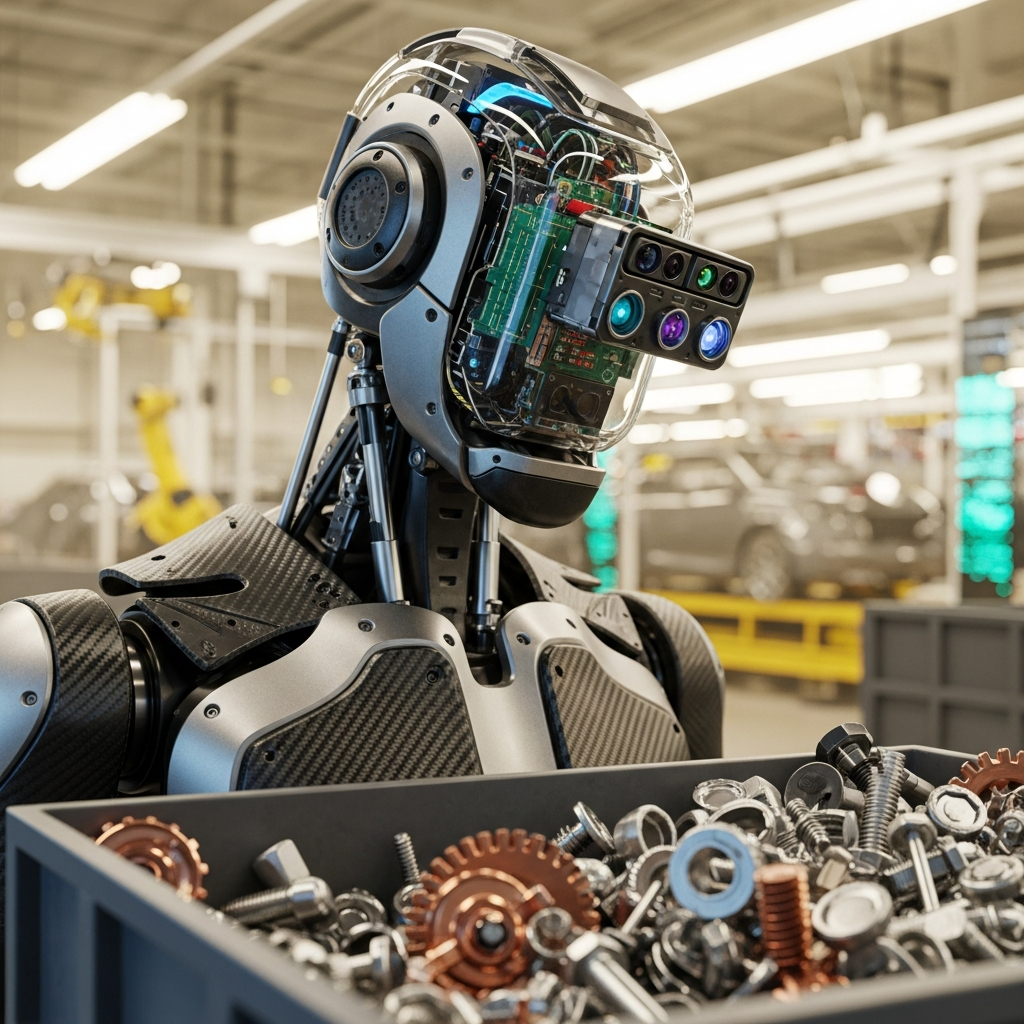
Mercedes-Benz and BMW humanoid robot pilots represent a software architecture shift rather than a hardware novelty. Traditional industrial robots are deterministic; they execute pre-coded coordinates and fail if a component shifts by millimeters. The systems deployed in these pilots utilize VLA models to interpret natural language and adapt to unstructured environments in real-time.
The International Federation of Robotics (IFR) identifies this convergence as a critical global trend for 2026, marking the transition from "automation" (repetition) to "autonomy" (handling variability) [1].
For the C-suite, this technology demands a revised capital strategy. The risk profile has moved from hardware depreciation to software governance. This analysis outlines the economic realities, implementation risks, and decision frameworks for Embodied AI in 2026.
The Market Signal: Software-Defined Production Capacity
Robots have evolved from hardware-centric assets to software-defined agents. As of January 2026, Generative AI enables machines to perceive, reason, and act without explicit line-by-line coding. This allows robots to generalize across tasks, managing variability that previously required human dexterity [2].
Competitive Framing
Manufacturing strategies are diverging:
- Market Leaders (e.g., Tesla, BMW, Siemens): Treat robotics as a flexible labor pool. They deploy general-purpose hardware updated via over-the-air (OTA) software. A single unit switches from palletizing to kitting as demand fluctuates.
- Market Laggards: Continue investing in single-purpose, rigid automation cells. These assets offer high speed but zero flexibility, becoming balance sheet liabilities when product lines change.
Global robot demand in factories has doubled over the last decade, with the growth curve now favoring these adaptive systems [3]. Laggards risk higher labor costs and an inability to reconfigure production lines rapidly during supply chain shocks.
Economic Impact: The "AI Tax" and True TCO
Cost-benefit analyses for Embodied AI are frequently oversimplified. Reports highlighting humanoid robot operating costs at approximately $5.71 per hour—versus $28 per hour for U.S. warehouse labor—create an incomplete narrative [4].
The Hidden Cost Reality
Executives must view $5.71 as the hardware operating cost. Total Cost of Ownership (TCO) requires adding the "AI Tax"—the costs associated with intelligence and reliability.

Estimated Hourly TCO Breakdown (2026):
- Base Hardware Amortization: ~$5.71
- Inference Costs (Cloud/Edge Compute): ~$4.50 (VLA models require significant GPU resources per action).
- Maintenance & Service Contracts: ~$2.00 (Typically 15-20% of hardware cost annually).
- Supervision Overhead: ~$3.00 (Allocated cost of human "fleet managers").
- Real TCO: ~$15.21 per hour
While $15.21 represents a 45% savings against a $28 human wage, it is nearly triple the marketed base rate. Furthermore, this ROI materializes only at scale. Deployments under 20 units often fail to break even due to the fixed costs of the required digital infrastructure.
Core Strategy: The "Simulate-Then-Procure" Paradigm
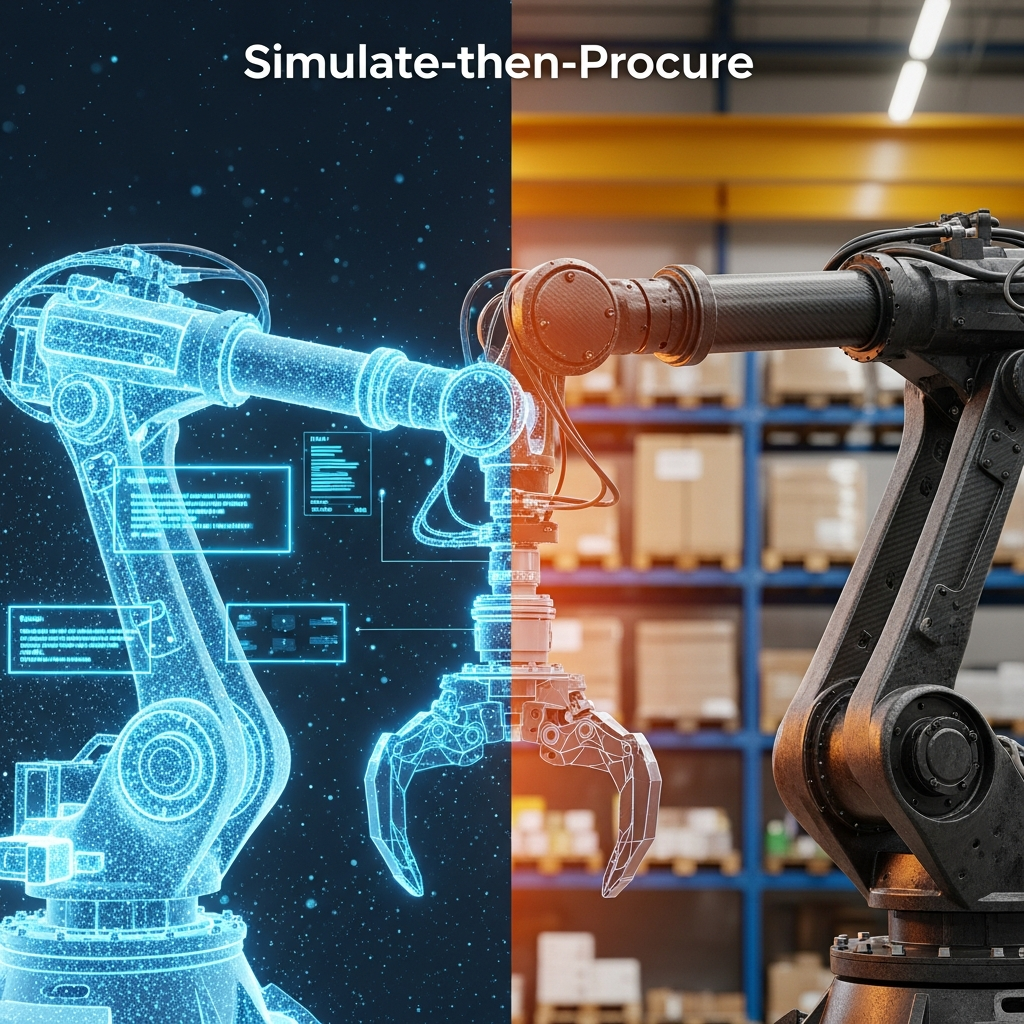
High failure rates in previous robotics initiatives (often termed "shelfware") mandate a change in procurement logic. Leading organizations now adopt a "Simulate-then-Procure" model. AI agents are trained and validated in physics-compliant digital twins before capital commitment to physical hardware [5].
Reducing Integration Latency
Traditional integration involves physical setup, wiring, and weeks of on-site coding. By utilizing foundation models that understand physics and semantics, engineering teams verify throughput, safety zones, and edge-case handling virtually. This approach reduces deployment timelines from the industry average of 8-12 months to 6-10 weeks [6].
Decision Criteria: Go / No-Go
Embodied AI is not a universal solution. It excels in high-variability environments but lags in high-precision tasks.
| Feature | Go for Embodied AI | No-Go (Stick to Traditional Automation) |
|---|---|---|
| Variability | High (e.g., Mixed-SKU palletizing, bin picking) | Low (e.g., Single-SKU mass production) |
| Precision | +/- 5mm tolerance acceptable | Sub-millimeter precision required (e.g., PCB assembly) |
| Cycle Time | Adaptive/Variable speed acceptable | Ultra-high speed fixed cycles required |
| Validation | Can be simulated in Digital Twin (e.g., Omniverse) | Requires physical tuning/calibration only |
Governance & Risk: Managing the "Black Box"
Integrating probabilistic LLM-driven robots into deterministic manufacturing environments introduces specific safety risks. A VLA model can theoretically "hallucinate" a movement command, creating hazards that legacy standards like ISO 10218 were not designed to catch [7].
The Compliance Landscape
The EU AI Act classifies safety components in autonomous machinery as "high-risk," requiring rigorous conformity assessments and data governance [8]. Executives must assume that "explainability"—knowing why the robot moved—will become a legal requirement for deployment.
Mitigation Strategy: The "Trust but Verify" Architecture
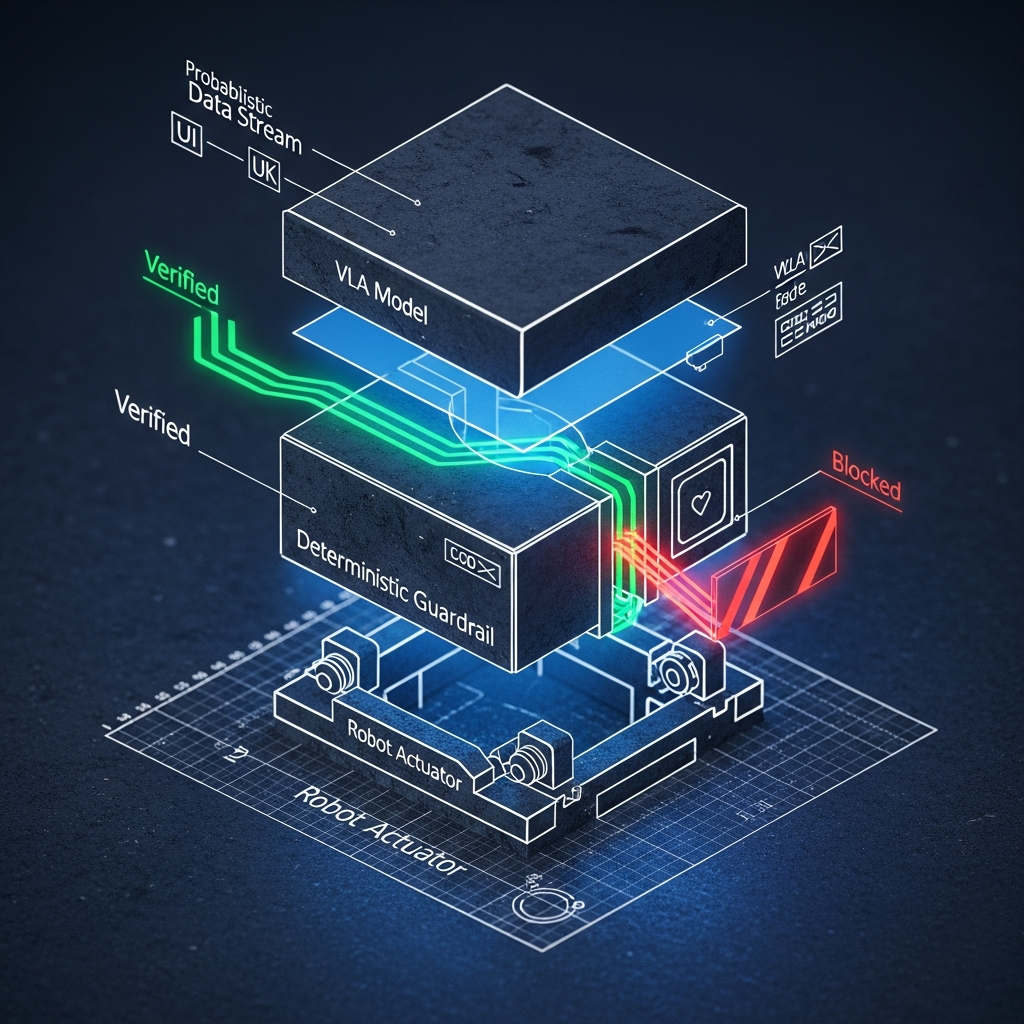
Safe deployment requires a layered control architecture:
- Layer 1: The AI Brain (Probabilistic): The VLA model generates high-level plans (e.g., "Pick up the red box").
- Layer 2: The Deterministic Guardrail (Hard-Coded): A separate, non-AI safety controller verifies the trajectory against kinematic limits (speed, force, zone). If the AI requests an unsafe move, the guardrail blocks it.
- Layer 3: Dynamic Certification: A shift from one-time safety checks to continuous runtime monitoring [9].
Strategic Roadmap: Options for 2026
The window for early-mover advantage is open but narrowing. This roadmap balances speed with risk management, moving from low-cost simulation to production scale.
Phase 1: Simulation & Validation (Months 1-3)
- Objective: Validate feasibility without capital expenditure.
- Action: Establish a "Simulate-First" pilot. Select a high-variability use case (e.g., kitting). Use synthetic data to train a VLA model in a digital twin environment.
- Success Metric: Achieve 95% success rate in simulation before procuring a single physical unit.
Phase 2: Controlled Physical Trials (Months 3-6)
- Objective: Benchmark safety and latency in the real world.
- Action: Partner with agile hardware vendors (e.g., Apptronik, Figure, Unitree) for leased pilots. Mercedes-Benz’s strategy exemplifies this: securing technology access via minority stakes or leasing to limit balance sheet exposure [10].
- Risk Control: Operate in caged or non-critical zones to gather data on "intervention rates" (frequency of human takeover).
Phase 3: Workforce Transition (Months 6-12)
- Objective: Operationalize the fleet.
- Action: Initiate transition of manual laborers to "Robot Fleet Supervisors."
- Rationale: Up to 60% of digital transformation failures stem from cultural resistance rather than technical issues. Upskilling workers to manage AI agents creates buy-in and utilizes their tribal knowledge of the manufacturing process [11].
Conclusion
Generative AI and robotics convergence offers a path to decouple manufacturing output from labor constraints. However, the technology is not a drop-in replacement for human workers; it is a complex system requiring robust digital infrastructure and new governance models.
Executive Action Options:
- Audit automation pipelines: Identify processes with high variability previously too expensive to automate.
- Mandate "Simulate-First": Require engineering teams to demonstrate feasibility in a digital twin for all new robotics CAPEX requests.
- Update Risk Registers: Incorporate "AI Hallucination in Physical Space" as an operational risk, requiring mitigation via deterministic guardrails.
The technology is ready for validation. Competitive advantage in 2026 belongs to organizations that govern it effectively.
Citations
- [1] Top 5 Global Robotics Trends 2026
- [2] Vision-Language-Action Models for Selective Robotic Disassembly
- [3] Global Robot Demand in Factories Doubles Over 10 Years
- [4] Only $5.71 an hour. It's the labor cost of the robot
- [5] Robotics Trends 2026: Physical AI, Humanoids & The "Simulate-then-Procure" Shift
- [6] Embodied Intelligence Toward Future Smart Manufacturing
- [7] Updated ISO 10218
- [8] AI Act
- [9] Dynamic Certification for Autonomous Systems
- [10] Mercedez-Benz Invests in Apptronik
- [11] How Agentic AI can Augment Human Expertise in Manufacturing
References
- Unified Vision-Language-Action Model
- researchgate.net
- Robotics in 2025: if it moves, it can be automated
- Embodied AI Ushers in a New Robotics Era
- Top Tech Trends 2026: seven trends in the semiconductor sector for 2026
- International Federation of Robotics
- Top 5 Global Robotics Trends 2026
- Embodied AI Market Size to Hit USD 4,067.3 Mn by 2033
- Embodied AI Market Size, Share
- snsinsider.com
- gartner.com
- mckinsey.com
- Robotics Trends 2026: Physical AI, Humanoids & The "Simulate-then-Procure" Shift
- iotworldtoday.com
- Tech Trends 2026
- AI Psychology Best Researcher Award 2025
- medium.com
- acm.org
- Supplement ITU-T Y Suppl. 72 (11/2022)
- AI Act
- Mercedez-Benz Invests in Apptronik, Expands Apollo Humanoid Robot Use
- Global Robotics Market Hits $205.5B by 2030 as Humanoid Robots Achieve Mass Production
- Only $5.71 an hour. It's the labor cost of the robot. Compared to the $28 an hour for U.S. warehouse..
- RealMan Robotics Showcases Embodied Intelligence Infrastructure at CES 2026
- Top Emerging AI Technologies 2025
- How Agentic AI can Augment Human Expertise in Manufacturing
- Deloitte: How AI Will Redefine Manufacturing Competitiveness
- Engineering and Manufacturing Industry Predictions for 2026 and What It Means for Jobs and Hiring
- 5 manufacturing trends to watch in 2026
- Manufacturing's AI Tipping Point: From Pilots to Production in 2026
- International Federation of Robotics
- Global Robot Demand in Factories Doubles Over 10 Years
- World Robotics Report 2025
- eu-japan.eu
- Japan Smart Factory Market Expected to Reach USD 9.2 Billion by 2034
- AI in Manufacturing
- Gov't to funnel $478 mil. into AI transformation of manufacturing sector in 2026
- GitHub
- Vision-Language-Action Models for Selective Robotic Disassembly: A Case Study on Critical Component Extraction from Desktops
- State of Vision-Language-Action (VLA) Research at ICLR 2026
- Humanoid Robots Complete Trial Project at BMW Assembly Plant
- Figure AI's BMW Partnership: Reports Detail Cautious First Steps for Humanoid Robots in Manufacturing
- Tesla Optimus Production 2025
- The AI Standards Every Manufacturer Should Know
- Updated ISO 10218
- ISO 10218 IDEC Technical Article
- The Global Humanoid Robots Market 2026-2036
- Unitree Robotics
- Top 20 Advanced Humanoid Robots of 2026: The Future is Here!